
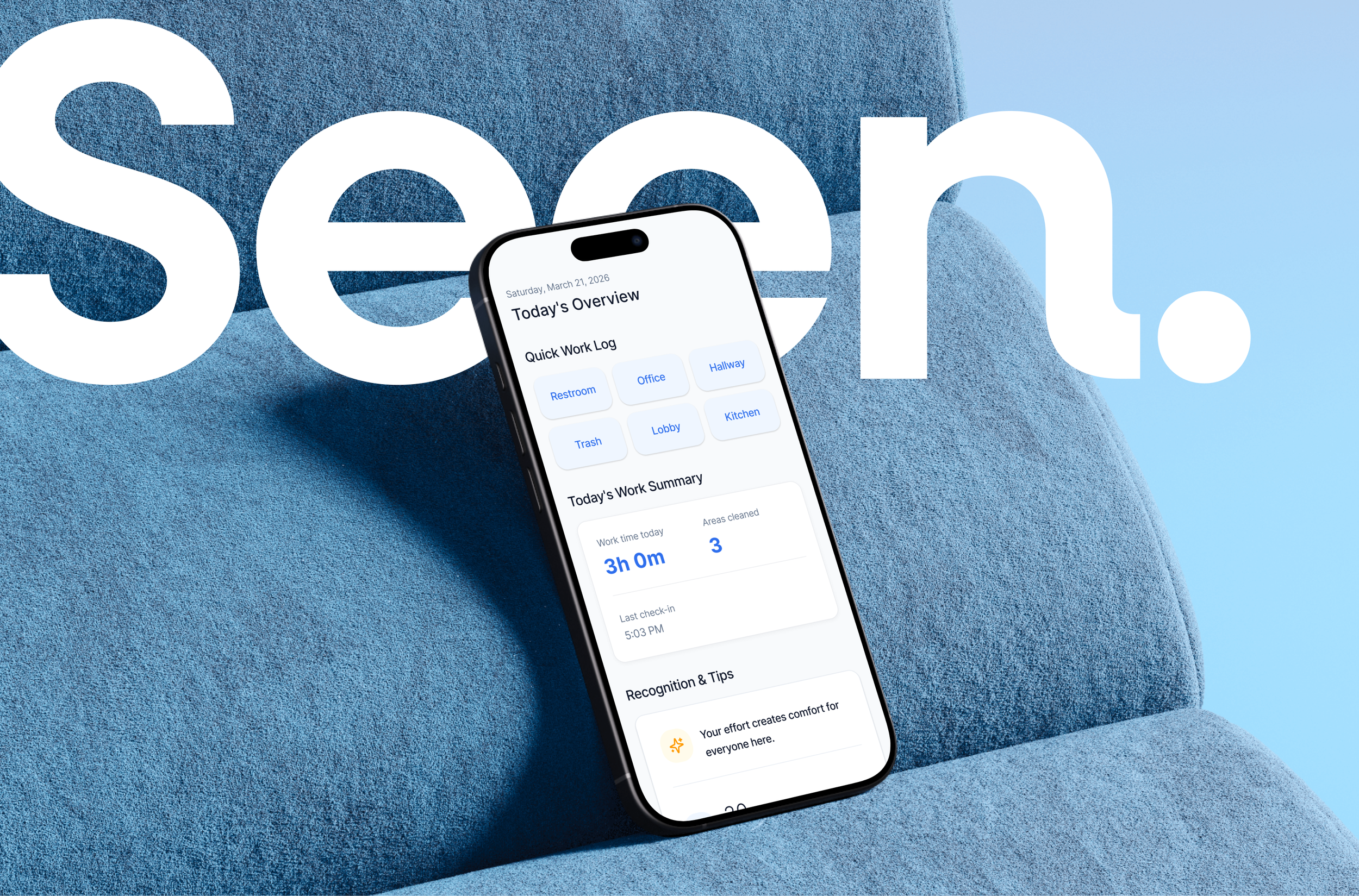
This project designs a mobile system for cleaning staff to document their work and care for their wellbeing. By combining work records, emotional check-ins, and exportable logs, it aims to make invisible labor visible and give workers greater control over their own data. It also reframes everyday logging tools as a form of protection, recognition, and long term support for workers in physically demanding roles.
Tool Figma
Type UI/UX Design
Industry Worker Wellbeing
Duration 4 Weeks
Seen.


Making invisible work visible, and the people behind it.
A mobile system for documenting labor, supporting wellbeing, and giving workers control over their own records. It helps make invisible work visible.
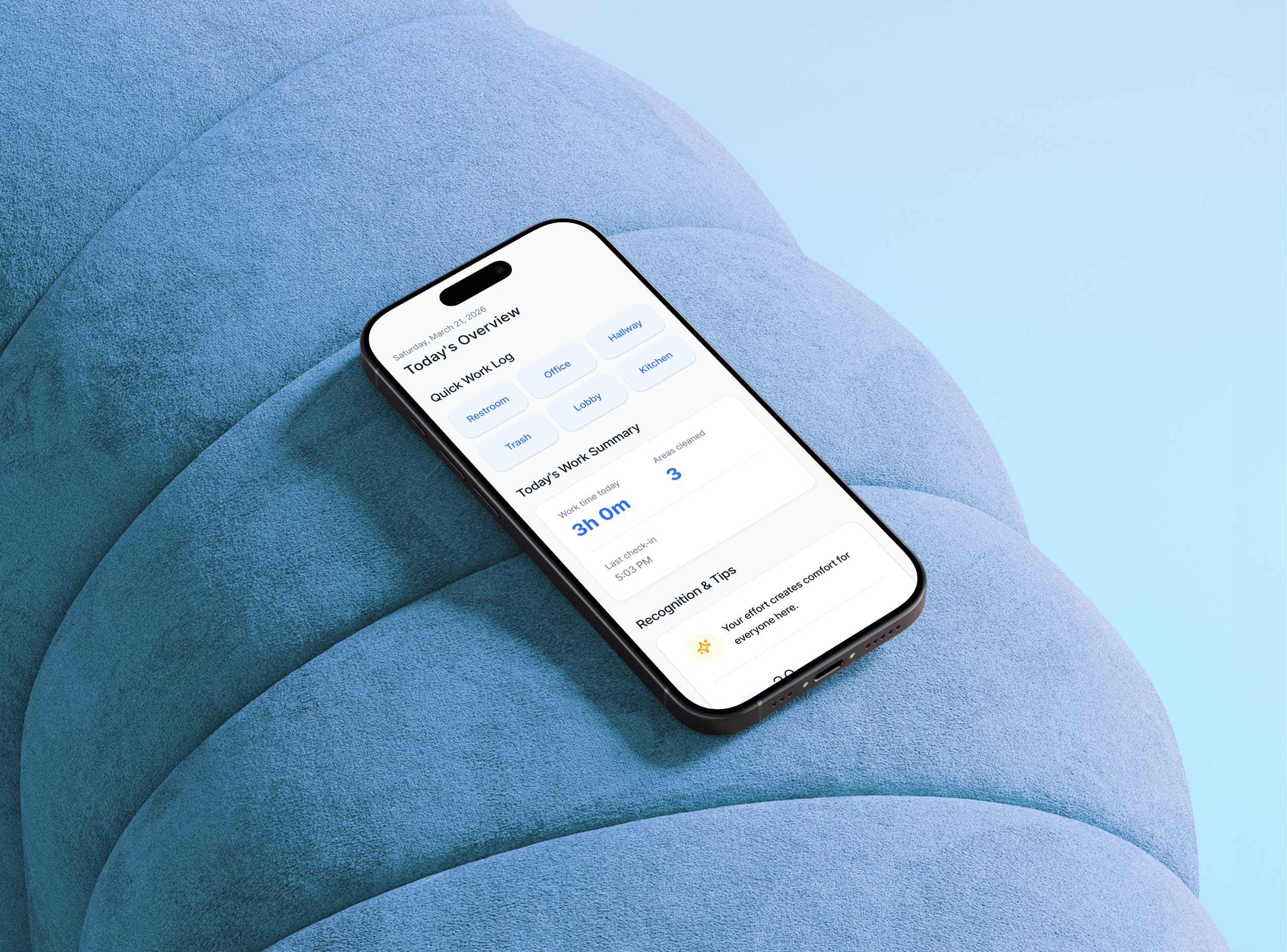
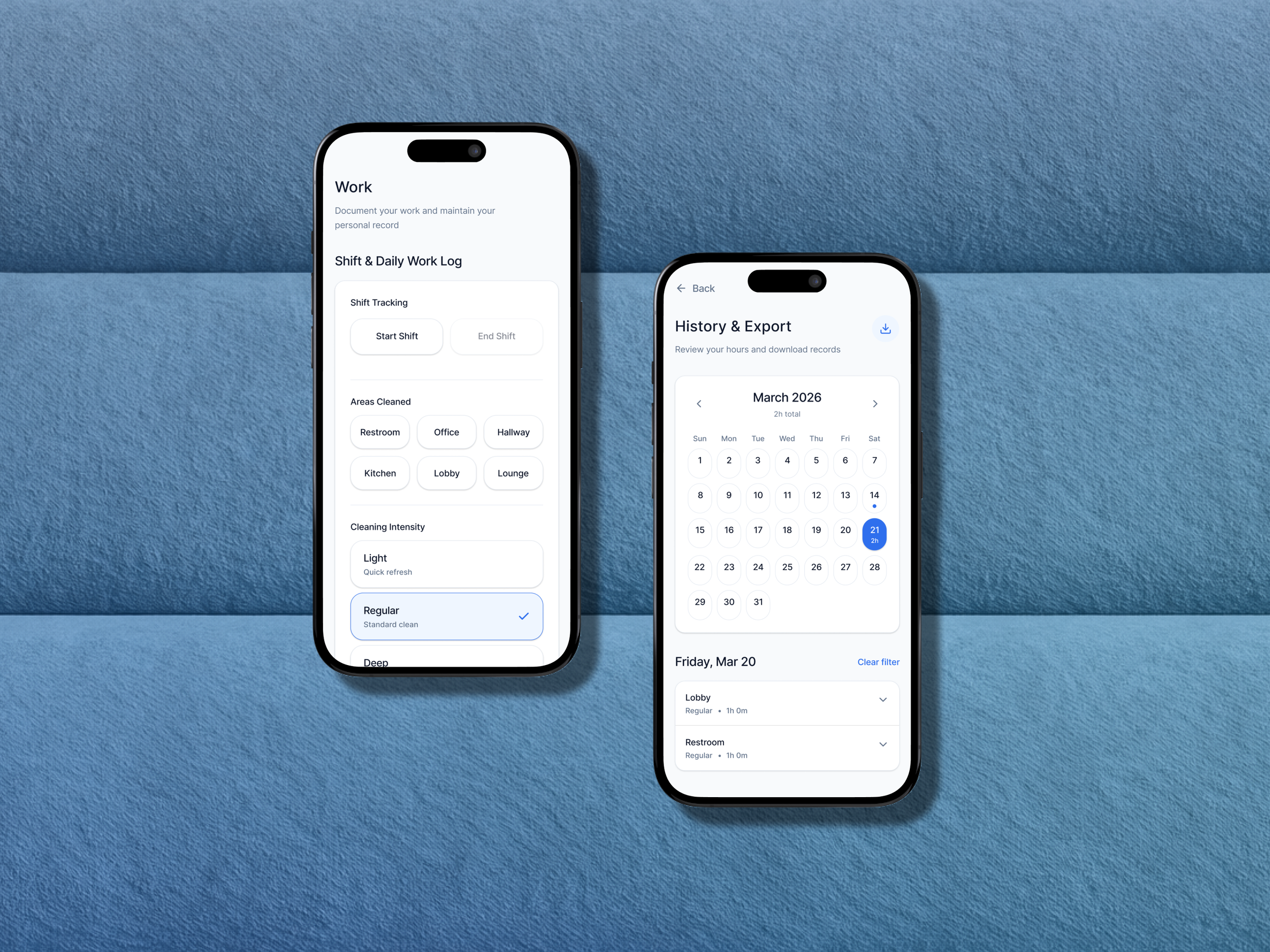
From daily work to documented history. Each task becomes a record, making labor traceable, visible, and always within the worker’s control.
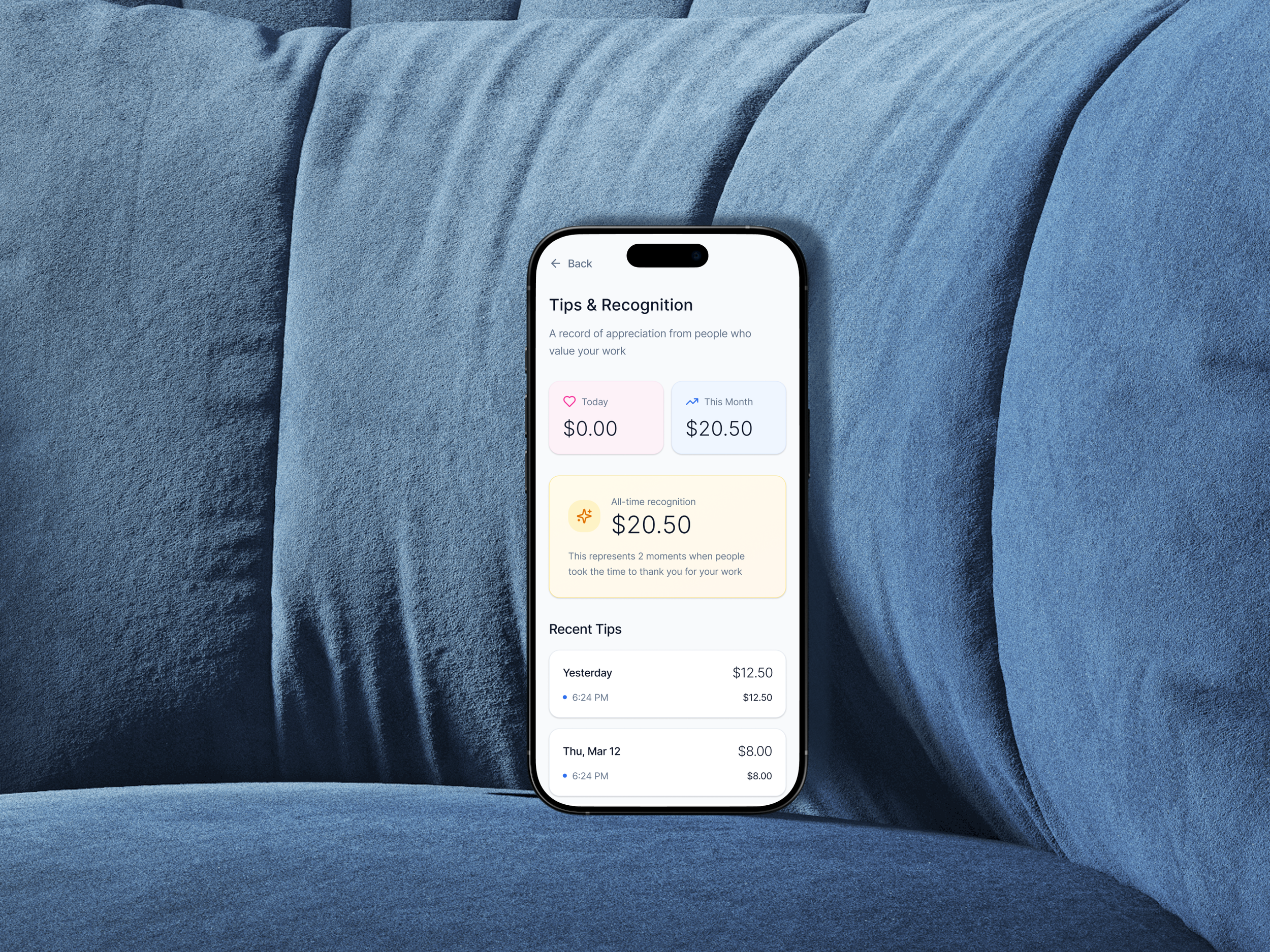
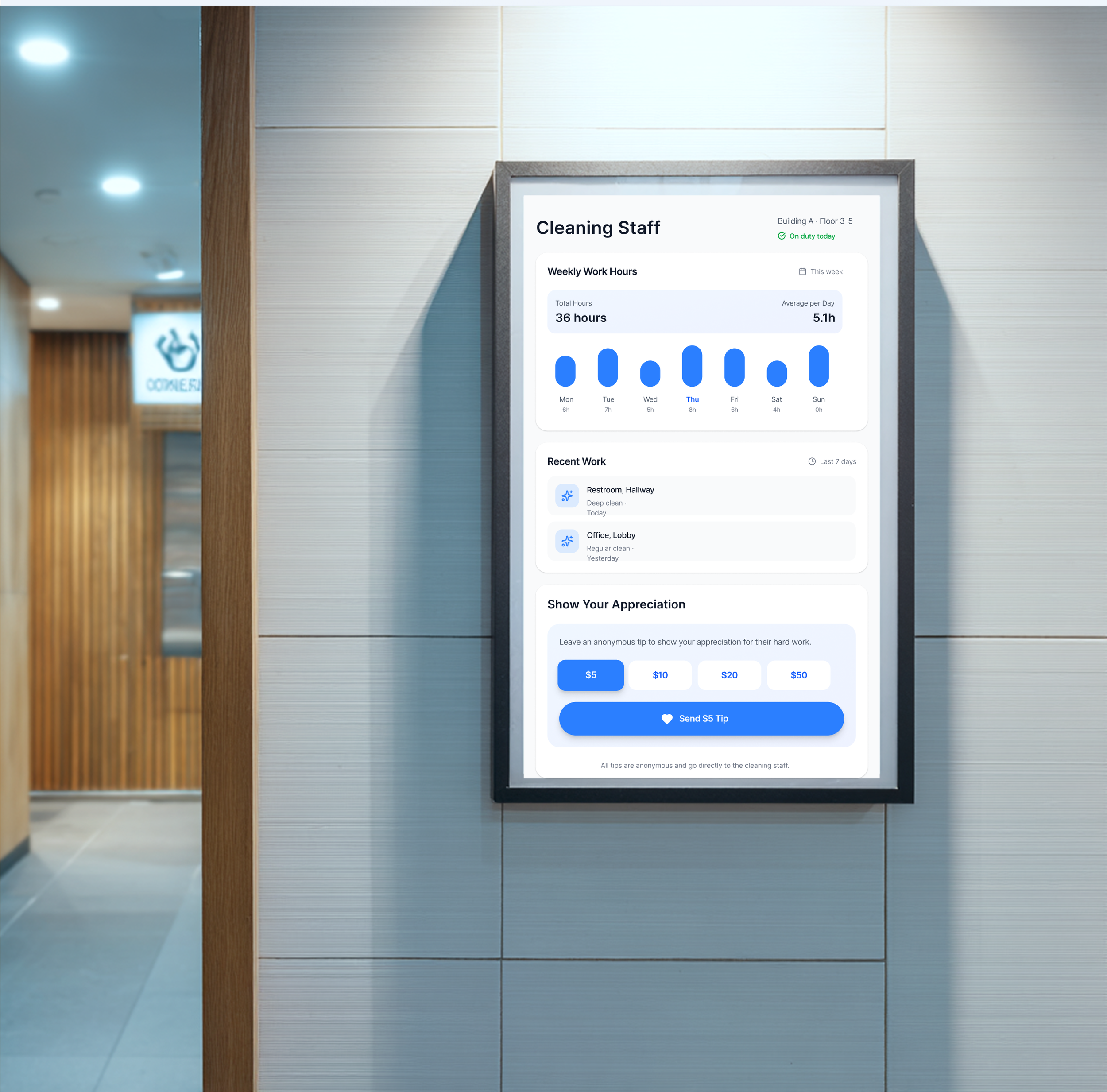
Work becomes visible in the spaces it supports. Through shared displays in offices and restrooms, people can acknowledge the labor behind the environment and offer small, direct tips.
”I wanted to make workers’ labor visible and something they could use to support themselves.What if logging work wasn’t about monitoring, but about giving workers ownership of their own records?“
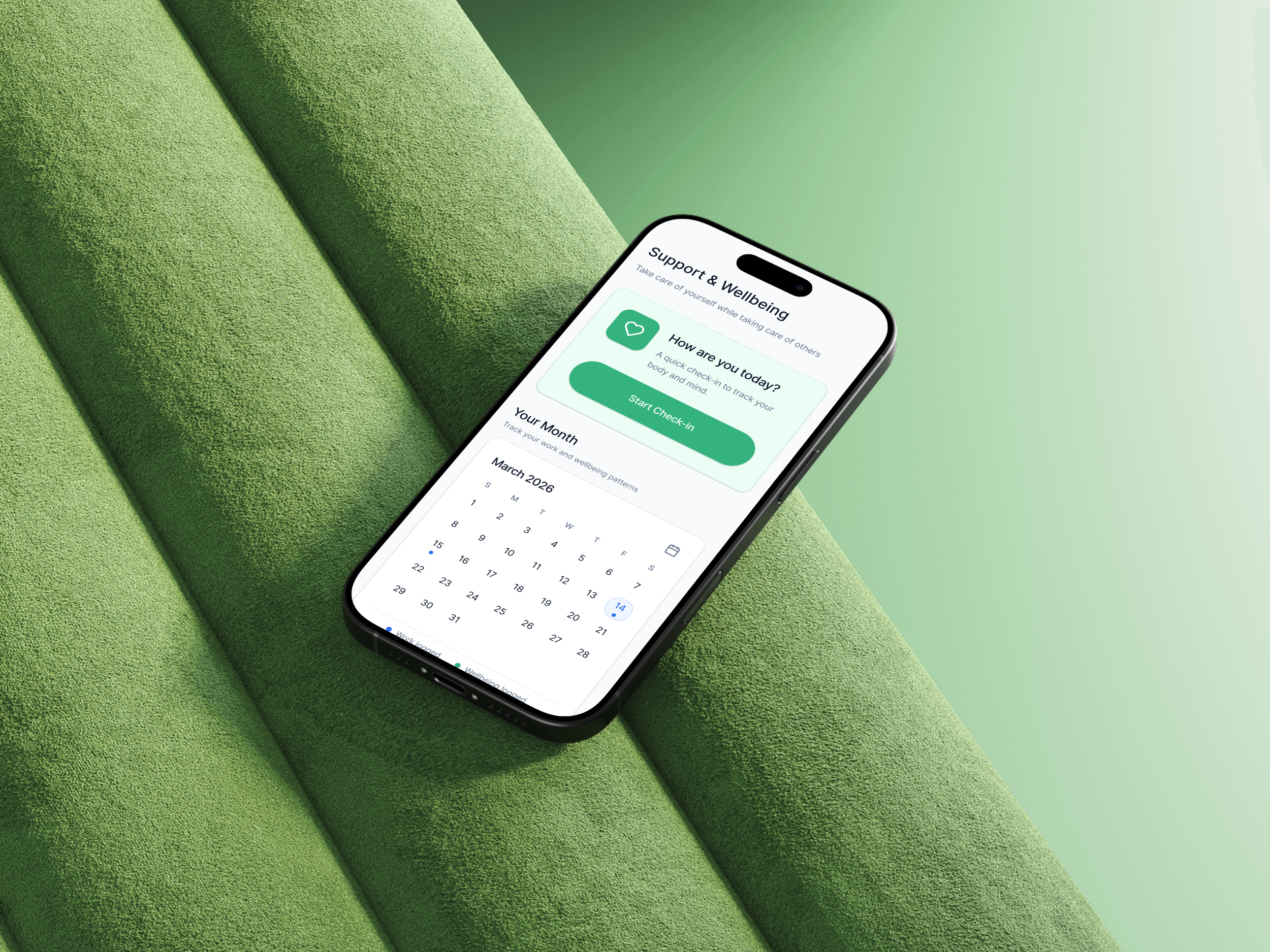
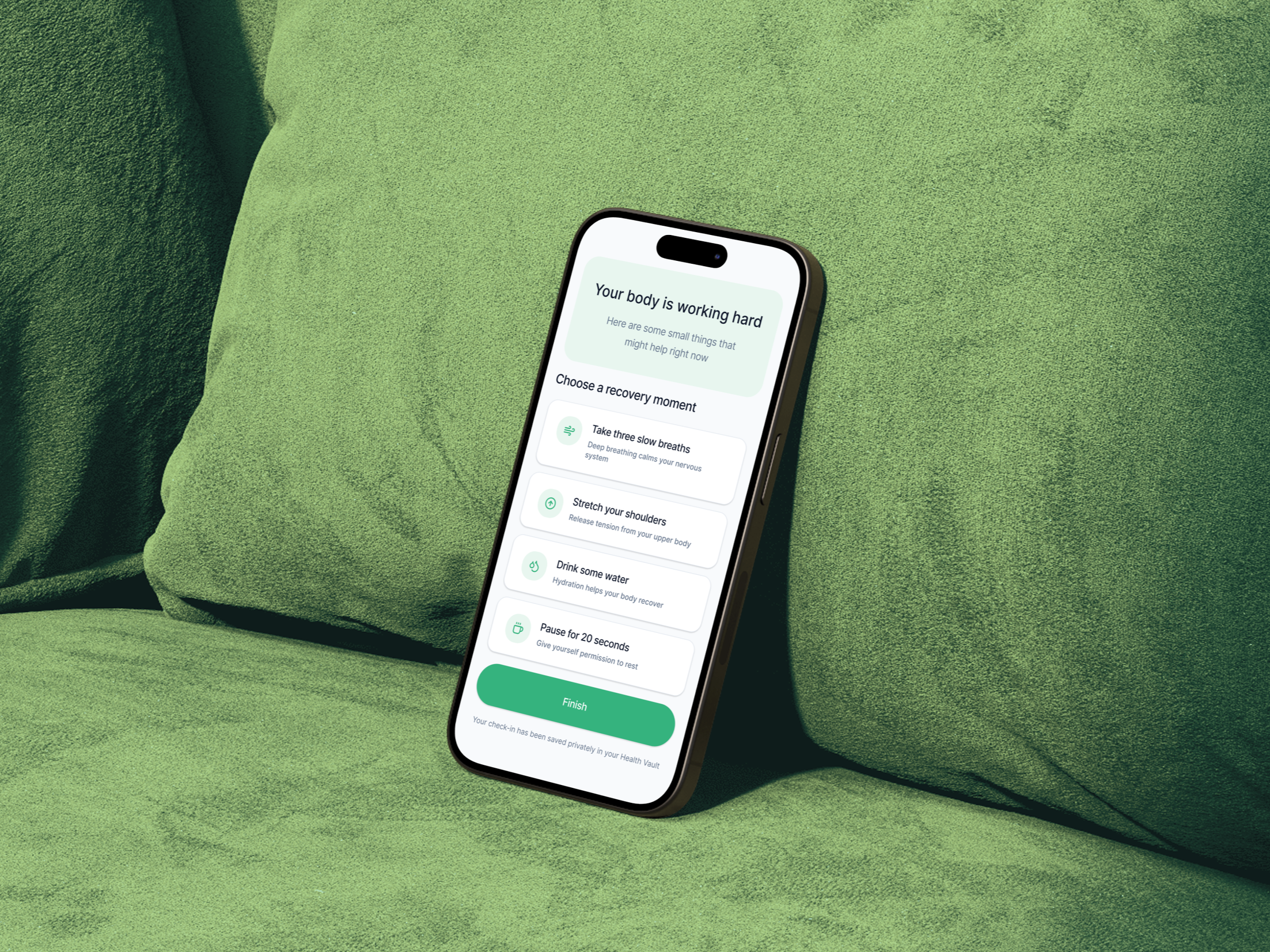
The app also includes a wellbeing system that supports workers beyond their daily tasks. Through short check-ins, users can reflect on their physical condition and emotional state, while a calendar helps them track patterns over time.



Through a short check-in, users can reflect on what happened during their day, both physically and emotionally. Based on their responses, the system offers small, immediate suggestions to help them pause, recover, and regain balance.
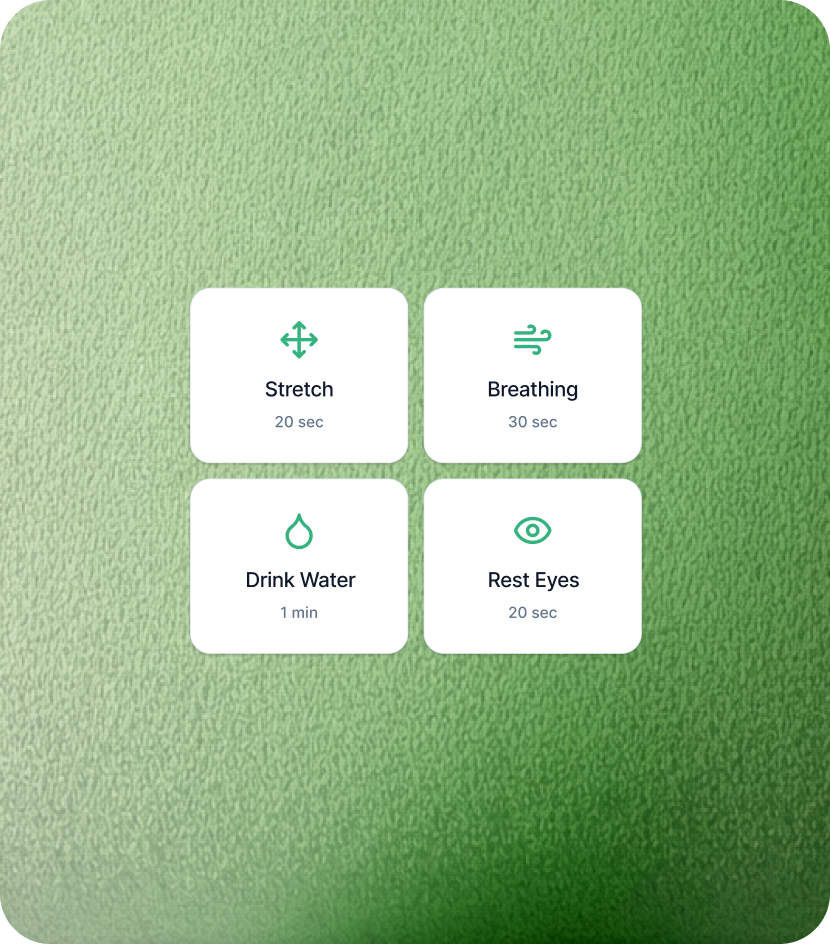
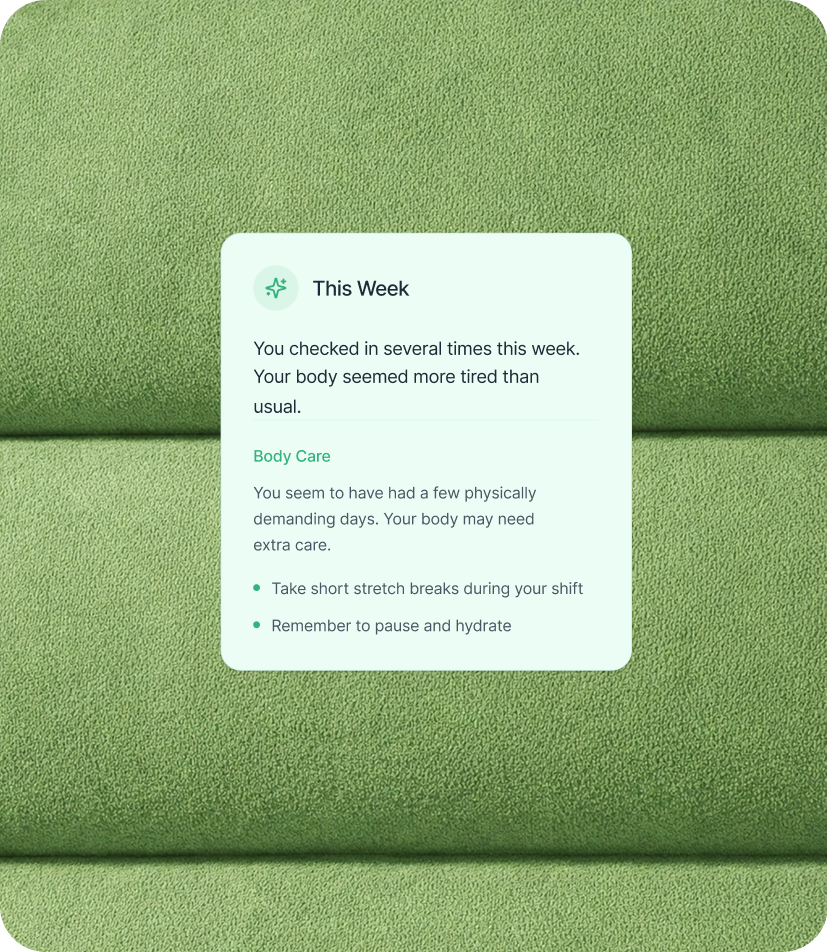
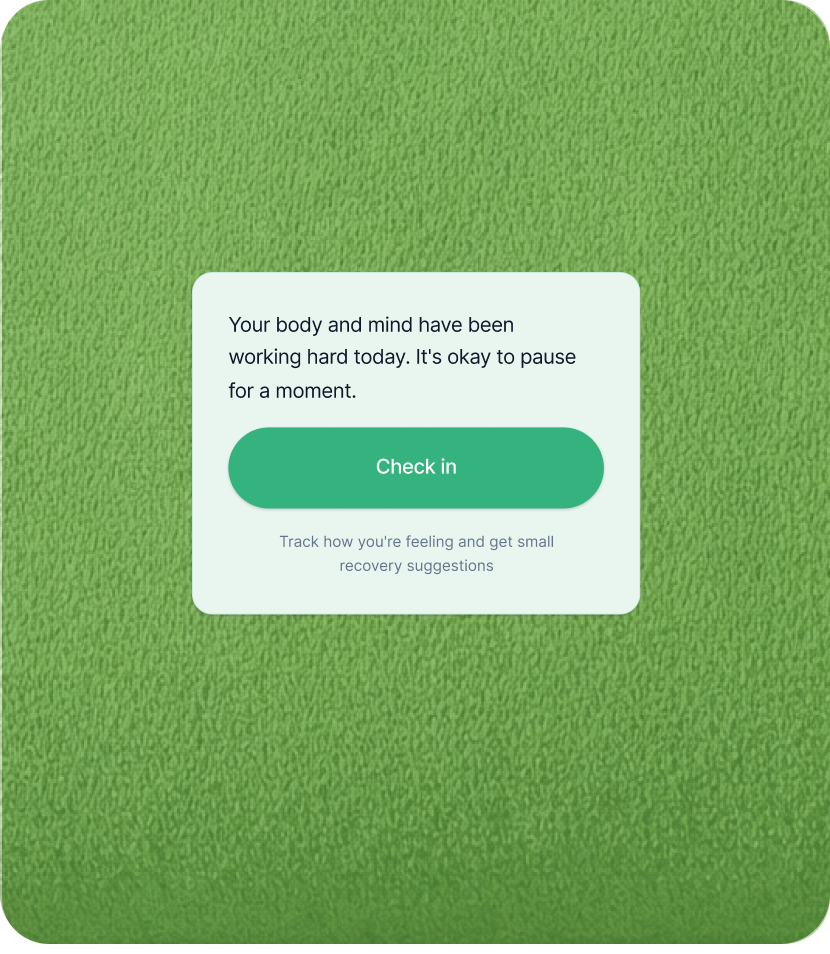
“Not every difficult moment needs to be fixed. Some just need to be acknowledged.”
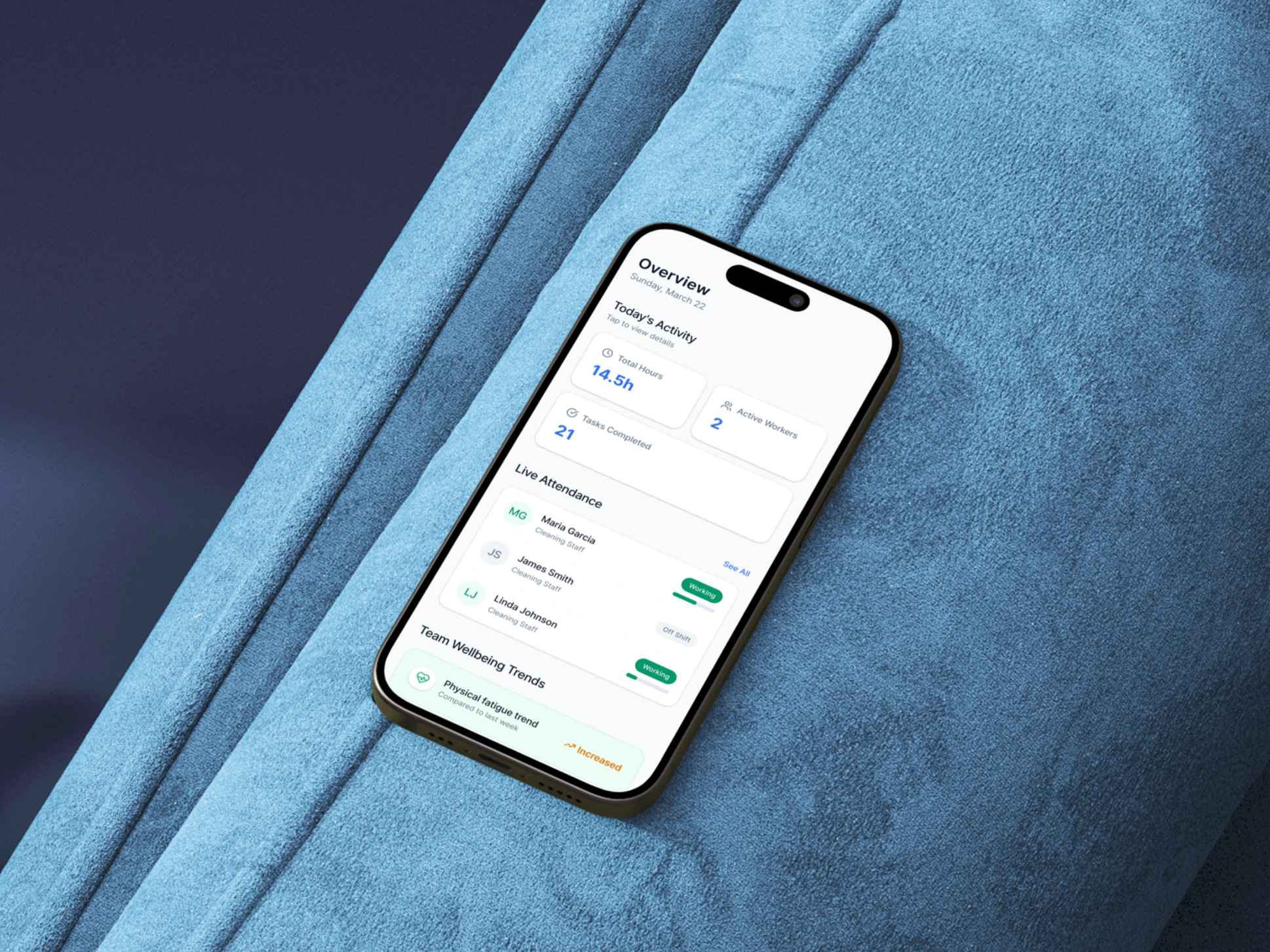
The employer-facing interface provides clear visibility into daily operations while respecting worker privacy. Managers can see who is on shift, how long they have worked, and what tasks have been completed in real time.
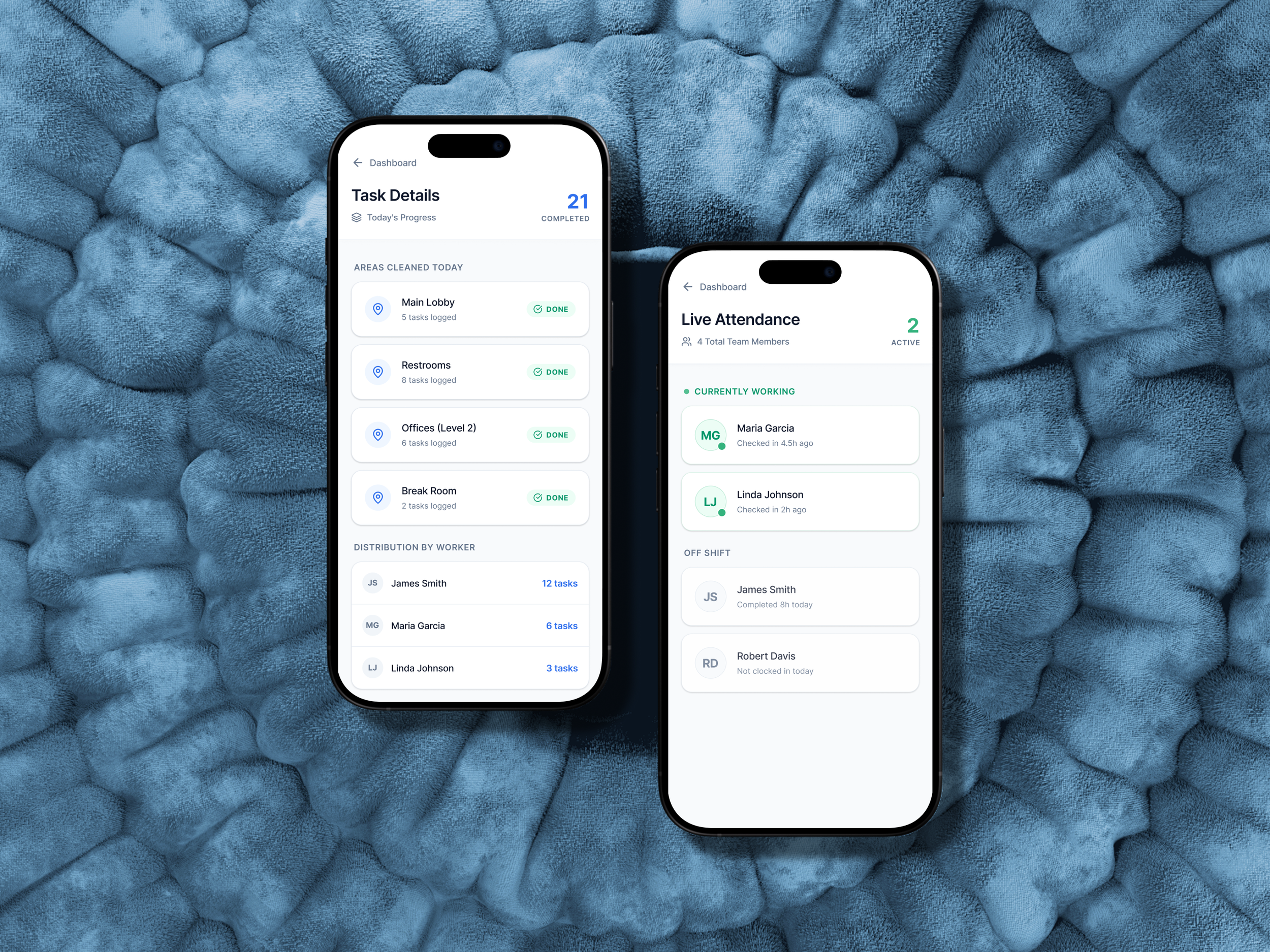
“At first, I explored connecting wellbeing data between the worker and employer apps to support better care. But I realized that even partial visibility could create pressure. So I shifted the design to share only anonymous patterns, allowing connection without exposing individuals.”
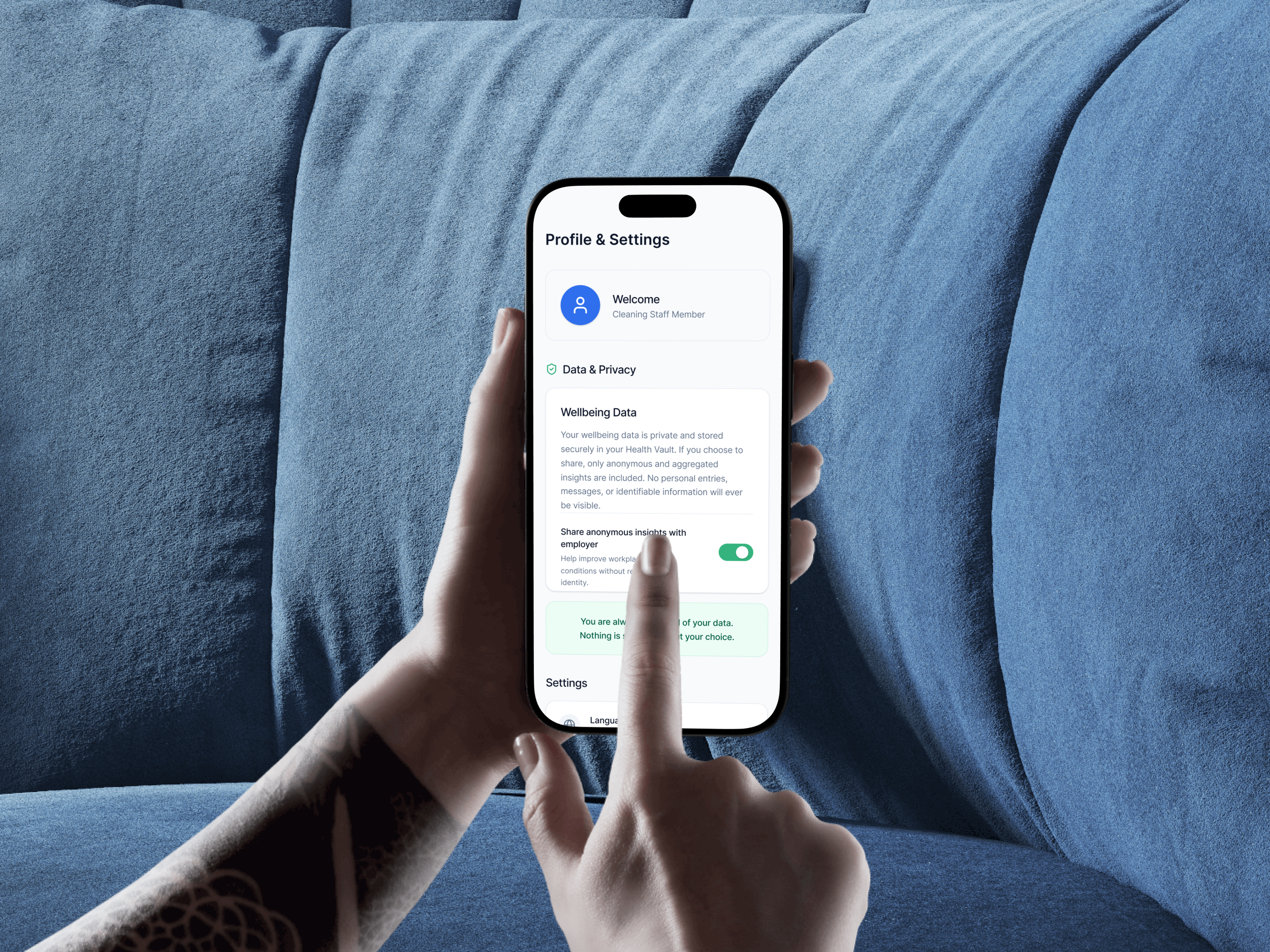
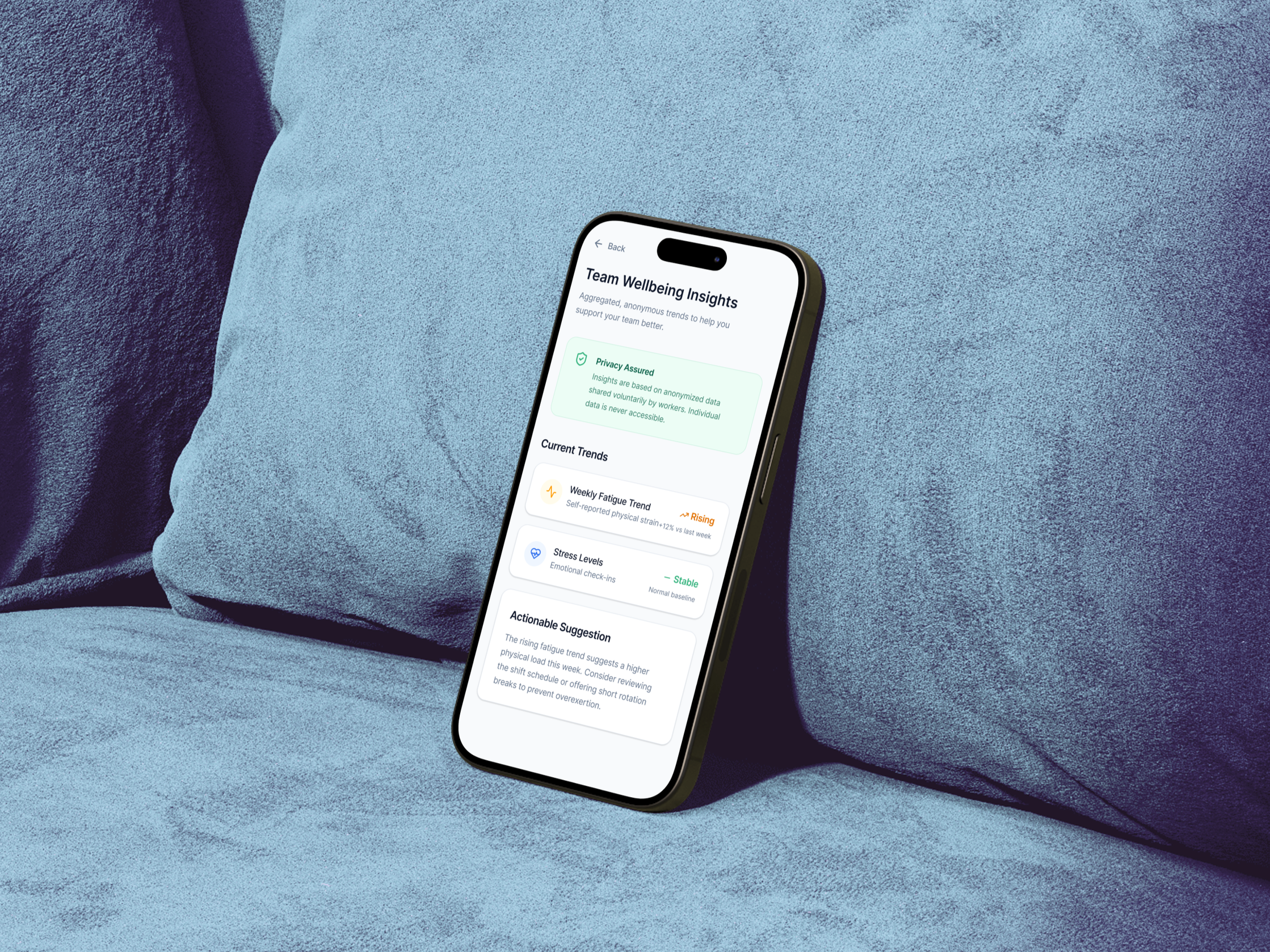
Workers can choose to share their wellbeing data anonymously. Instead of exposing individuals, the system transforms these inputs into team-level insights, enabling support without compromising privacy.
“This project made me rethink what “visibility” means in design. At first, I focused on making invisible labor visible, but I realized that too much visibility can also create pressure. It pushed me to think about boundaries, not just what to show, but what to protect. In the end, I was designing not just features, but a system that respects both work and the people behind it. "